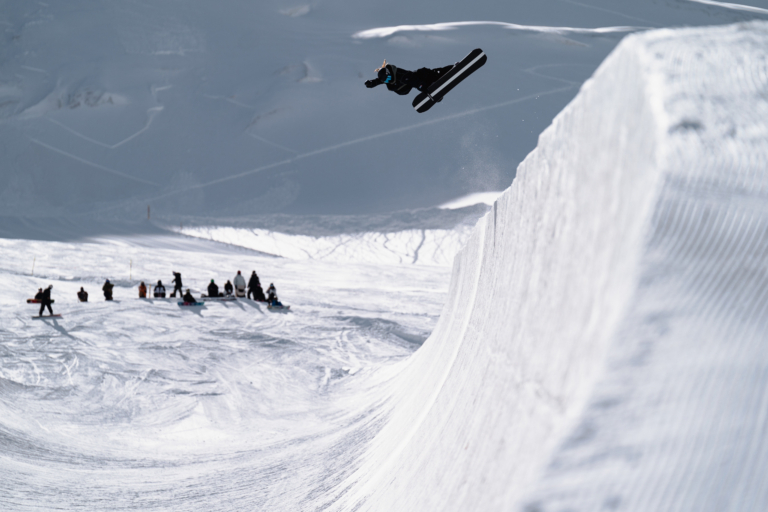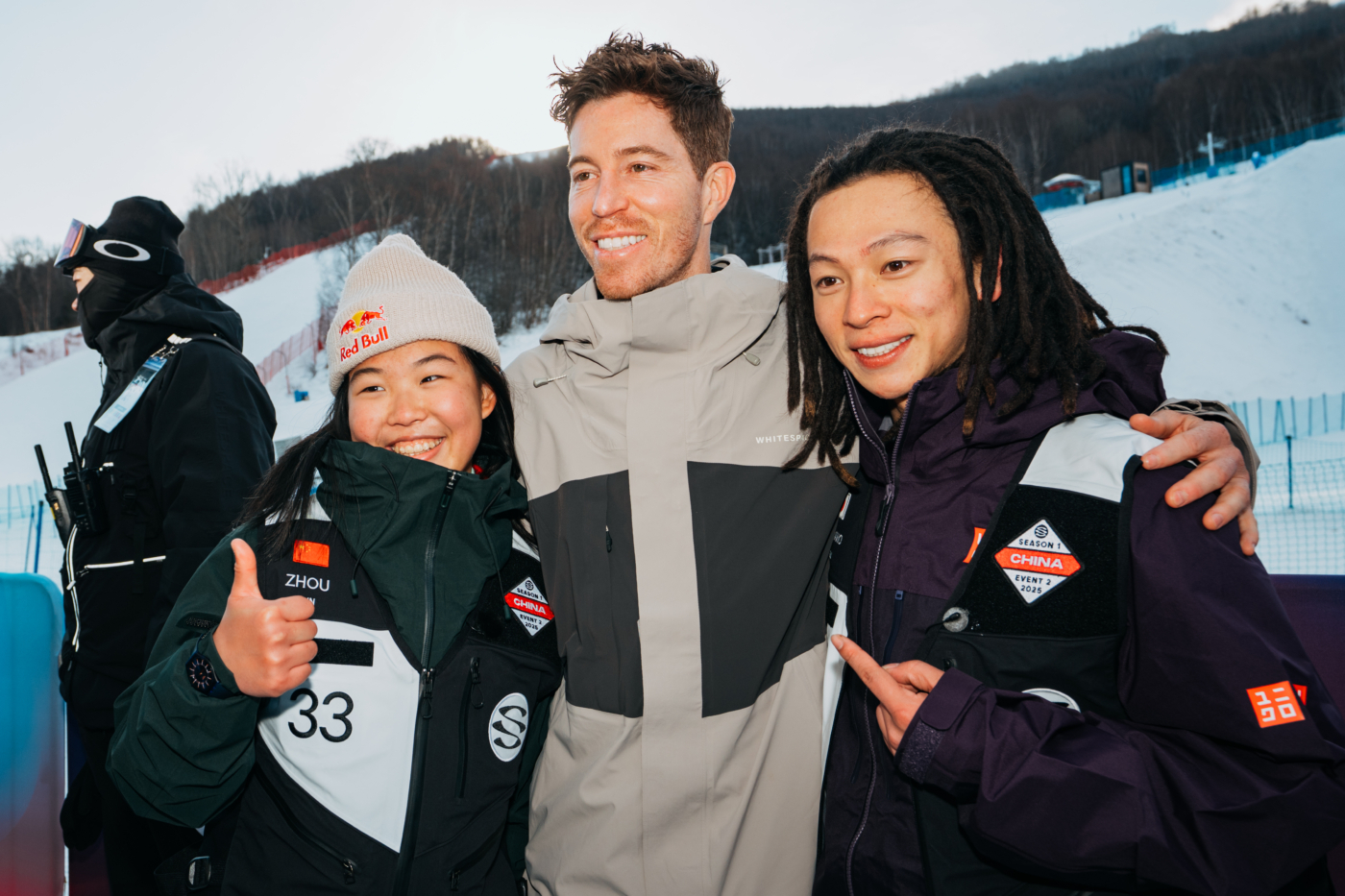
When Shaun White’s The Snow League launched last spring in Aspen, something was different. Sure, it was still a halfpipe contest with the usual names on the start list at a venue we all know and recognize. Yet, despite the familiarity, there were a lot of questions to be answered. The teasers alone said something big was about to happen, and after talking with Shaun at event two in Chongli, China, that something has been made clear.
The league’s banner promise of The Future of Winter Sports Competition had been solidified after only two events of the season’s four. The format had athletes talking about applying strategy with lessons learned at event one, and they let it be known that they had the ability to influence the contest in a way that hasn’t been done before. Shaun’s vision to create a shift in competitive winter sports is buttressed by the structure, format and characters of celebrity level leagues existing outside of action sports. After a career of competing within systems that offered little change, Shaun and his team have created something that has shifted the rhythm of traditional halfpipe contests.
In the place where Shaun was once wondering what was next, we sat down to talk about everything he has since created with The Snow League.
Let’s get into the format. I have a good handle on it, but what inspired building out the new format and what gaps in competition snowboarding do you feel like you’re filling with this?
It was really inspired by the fact that during my years of competing, depending on where you’re at in the drop in list, you take your run and you wait. It would be almost an hour between runs, and I would just go freeride around the mountain. It was the only way to stay warm. So, I was like, “how do we fix that”?
We realized that doing heats, you would never wait over 25 or 30 minutes between runs, it’s pretty quick. It’s obviously a little bit more dramatic seeing the heats battle within themselves. What’s great about this is technically, you get two runs and if you blow it, you’re out. With this, you get three runs, there’s a last chance qualifier (LCQ).
We’ve made tweaks. In Aspen there were two last chance qualifiers, and here in China we only did one. We took the highest score from the first two runs and carried it over to the LCQ because we had feedback from the riders that felt like they were starting from scratch. As a competitor myself, I would be pretty annoyed if I had a hammer of a run and went to the LCQ and it just got erased.
Right, that’s so frustrating, especially in a heavy heat.
Yeah, in a heavy heat and one point away from making the top, and now I would have to start from the beginning and get one chance to do it. That’s a lot of pressure. We knew that having one score under your belt, you’d be a little more relaxed and you could play the strategy better. We want to hear the feedback, we want to make subtle tweaks and we have been. For finals, the reason we went with the head-to-head was that I’ve just seen the same [old] format my entire career. March Madness has a similar bracketing system, and we want people who haven’t seen the sport before to step in and say “wow”.
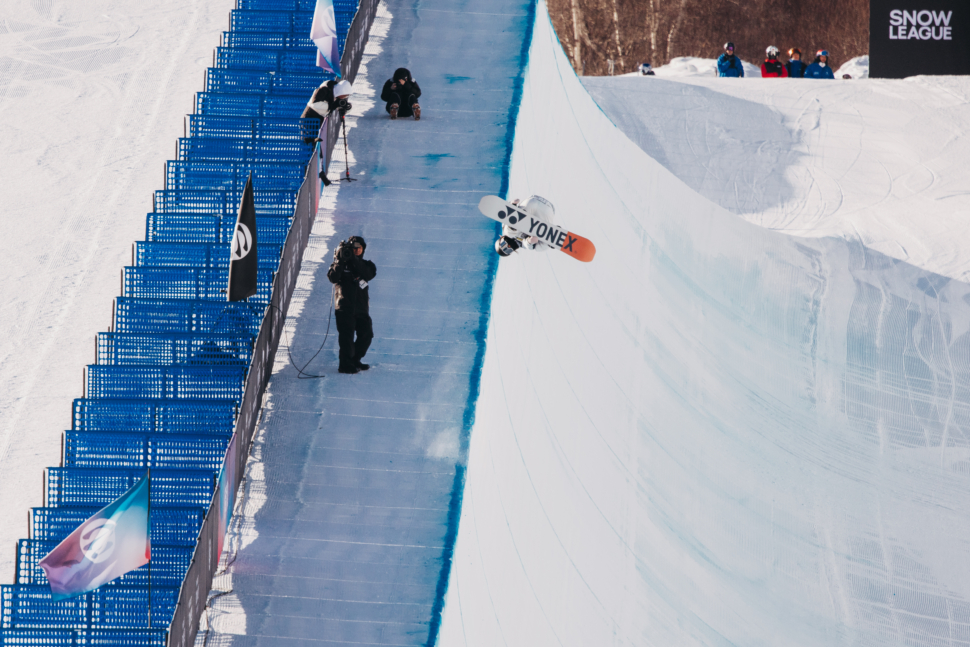
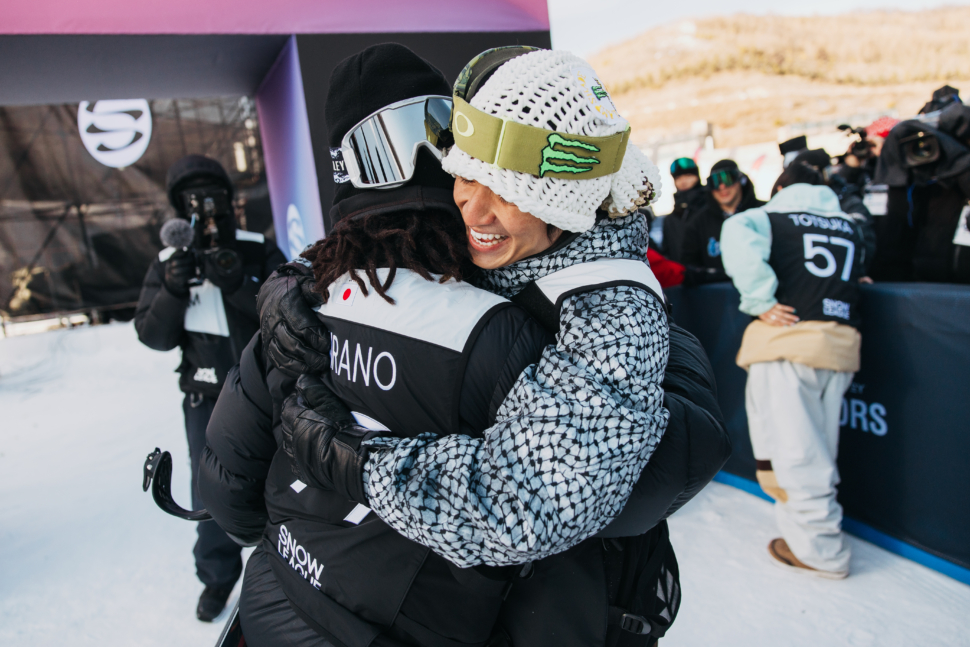
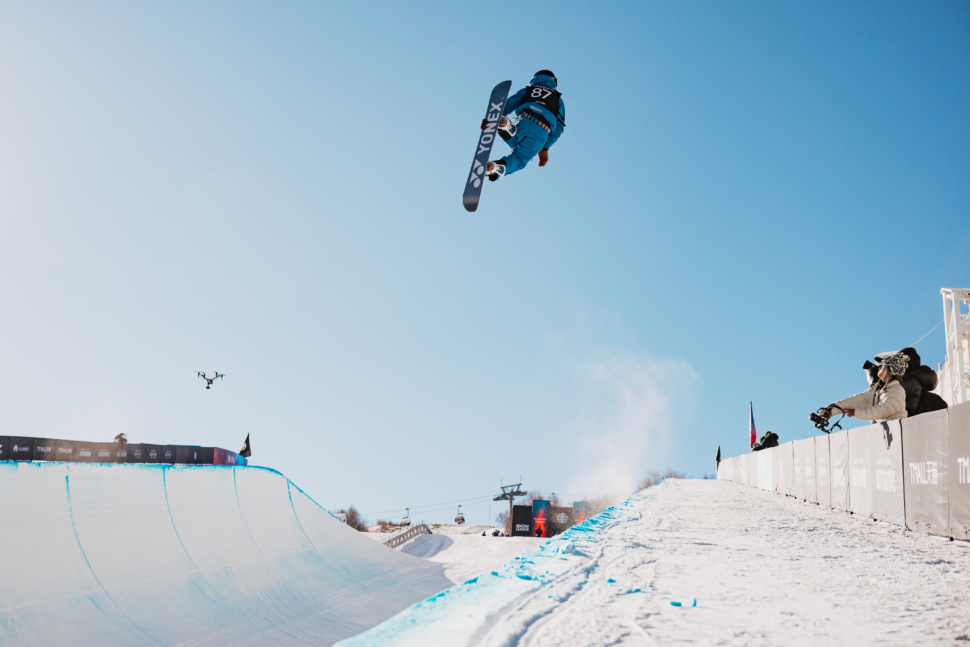
You can understand person vs. person or run vs. run, but let’s throw it to the judges or the on-site commentary to explain why. It creates a lot more excitement, drama, strategy. The whole two wall drop-in thing is from my playbook. I was like, “what would be really challenging for me”? I’m a strategic guy, I always knew I just needed one incredible run, and that’s kind of it. I get three chances to do it. Now, you’re forced to use both walls which naturally changes up the order of the tricks. It played out beautifully in the Aspen event because I feel like Ayumu [Hirano] was favored to win. He was forced to do his triple at a place in the pipe that he doesn’t normally do it, and he fell. So, there was a natural upset in the rest of the season. It all came from what would challenge me as an athlete. We have the reverse order drop-in because we didn’t want somebody to put in a great run and then just sit at the top and watch everyone else go.
Right, and that just ends with the old victory lap, you can just cruise down because you know you won.
Yeah, I definitely had a few. It was cool, but I would just not even be motivated to take a run. If I didn’t know what was coming behind me, shit, I’d have to throw down.
Yeah you would. How would you say this new format is opening up a different approach to progression?
I think it’s challenging athletes to have a bigger bag of tricks, a little bit more endurance. It’s a lot of runs. You get the upsets and the frustration and the athletes get to come back. After Aspen, I feel like Ayumu was upset, he doesn’t show anything through his Airhole, but he wanted to win the first one. It’s cool to watch it spread out over the season.
Yeah, it’s crazy how some of the matchups have repeated themselves in only two events. On the topic of the league, can you talk about how you prioritized appearance pay and the prize purse?
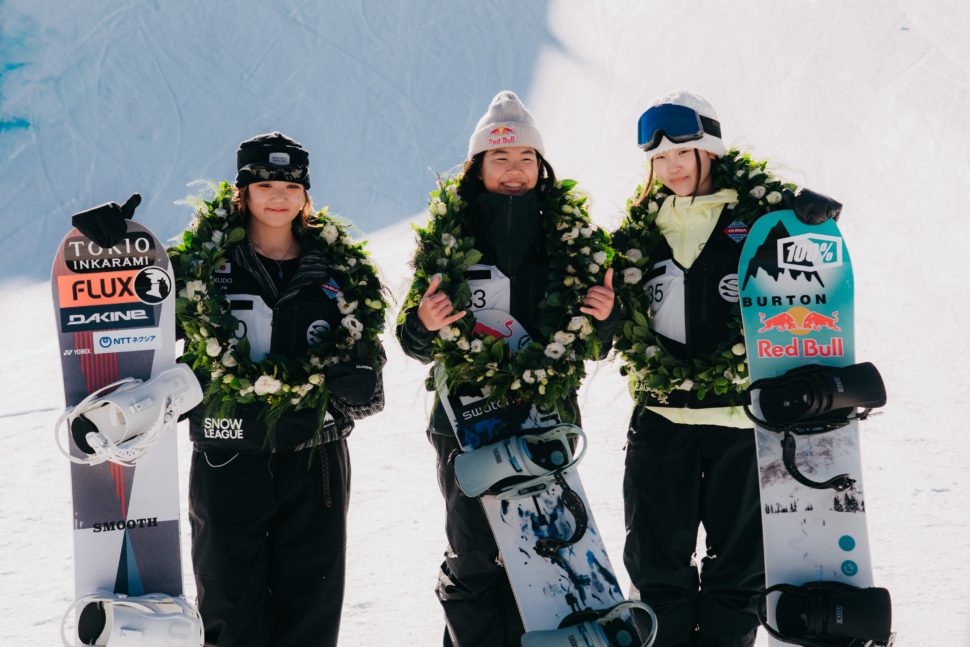
Well, the appearance pay is kind of prize money. It’s part of it, you made it all the way out here, whether you’re paying your own way or you have support, you should leave with something. It’s really just the start. We’re in the first season and I want those numbers to grow over time. That’s a priority. It’s important to support the athletes. It’s also important to give equal pay for men and women. That was something I just wanted to lead through an example here. Those were just simple decisions out of the gate.
It was a question of what can we afford to do as an emerging league, and I want it to be the highest prize purse out there, but what can we do to grow over time? And what other things can we offer the athletes, from physical therapy, the lounge, athlete areas, to their own locker, it’s simple things that make you feel taken care of. I definitely have to applaud our team because a lot of the stuff, I just throw out and then I show up and it’s all there.
Yeah, the setup is dialled. What’s the pathway to entry for younger riders? You’ve been talking about the next generation, but how do you plan to bring them into the fold?
I mean, look, it’s something near and dear to me because I have a youth camp business I’m involved in and that was a huge part of building out We Are Camp at High Cascade up at Mt. Hood because that was the place that inspired me as a kid. There’s this giant airbag now which is so cool and you can train year round. We would like to come up with some type of feeder, something that really brings people in.
[Miles Nathan, Snow League co-founder chimes in] We have certain wild card slots and we are talking about promotion and relegation. There’ll be the bottom number and there will be a relegation and there will be new crops that can come in. If you’re in the bottom, there’s a chance you’ll be relegated out of the league like the English Premier League in soccer.
[Shaun] Yeah, that’s a great question, we are trying to figure out how do we keep it growing? But hopefully with this being a successful tour, there will be more demand for half pipe at resorts. It’s dwindling.
Yeah, I mean, there’s only so many resorts with a pipe program and a good cutter.
As time goes on, it will be a badge of pride that an athlete came from this specific resort, hopefully one will bolster the other.
A lot of your team that I’ve met comes from really diverse sport and event backgrounds. With spectatorship in mind, what aspects of other sport disciplines have inspired The Snow League?
Formula 1 was kind of our north star. I went to F1 in Vegas and I was like, “this is really nice”. They’ve spent a fortune building this thing out, there’s a garage area with cars getting worked on, there’s really good food, it’s comfortable. It’s not just dad wants to watch and he’s dragging the whole family that has to stand in the cold at the bottom of the pipe. So we were like, let’s give people that experience that they would expect to get in Aspen or Laax. It’s always been a luxury sport, so to cater to that audience is in our branding and our imagery. You look at the marketing and the way it’s being pushed through social media, all these things, there’s a big difference. We’re trying to elevate this whole thing. From the jerseys to the branding, the hotel setup and food, we’re trying to get this to a place I think the sport has always been.
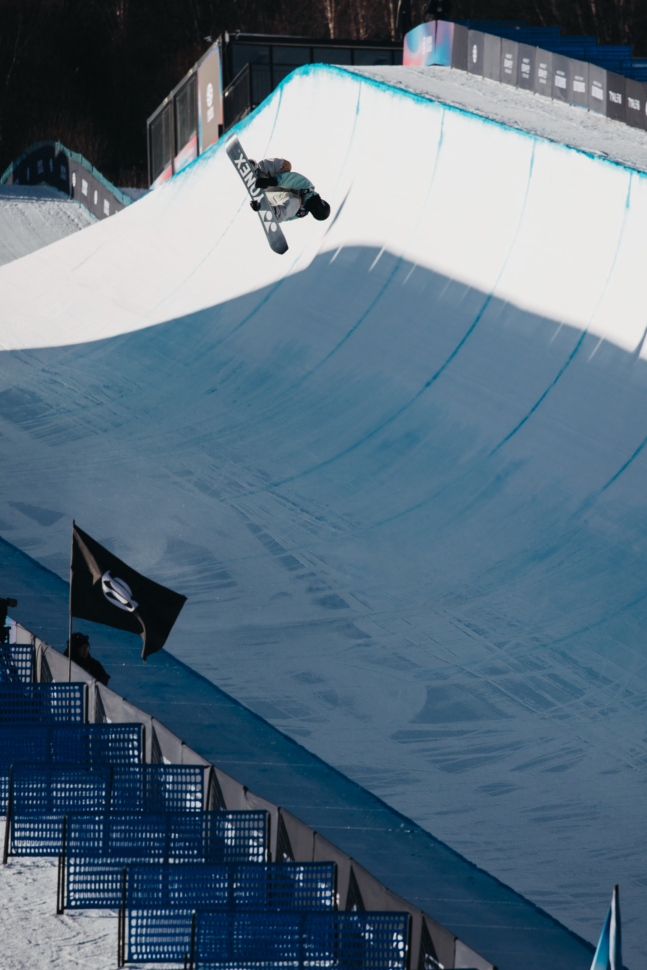
Like the golden era that has been lost.
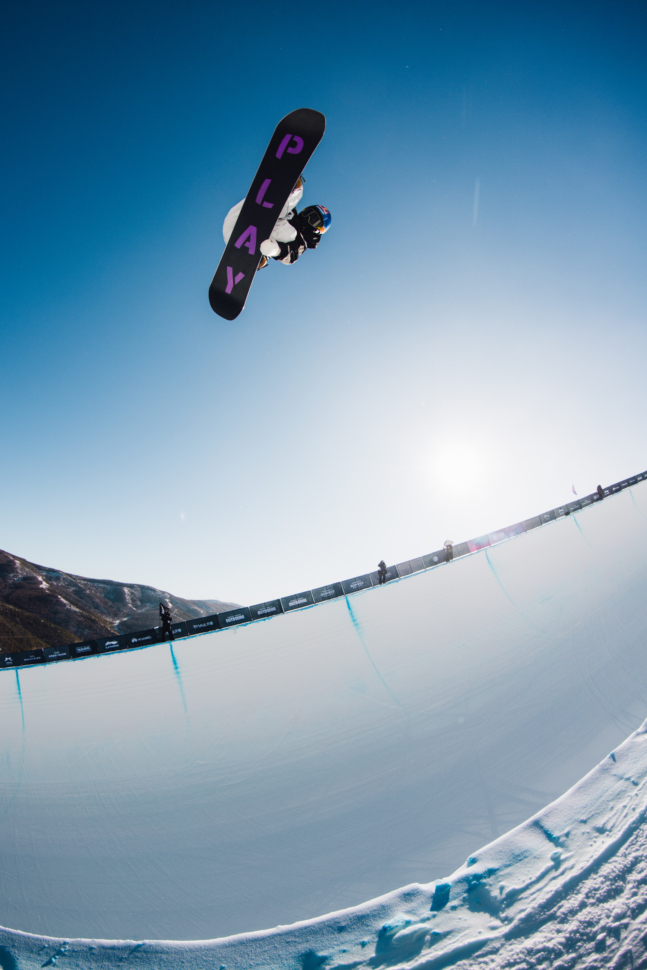
Yeah, something kind of happened along the way. It always pained me that we’re action sports. It’s sports. This is very intimidating. I’ve seen people that do some wild sports stand on the edge of a halfpipe and they’re shaking. We’re launching through the air doing flips. It’s peak athleticism and it should be portrayed that way.
Even the characters in the sport are very colorful. They’re young, and let’s get to know them. I was watching one of our content pieces on Alessandro [Barbieri] and they were like, hey man, what did you do with your first prize money? And he’s like, “I bought a cat, it’s a good cat”. He’s so funny, and he has this colorful relationship with his dad, and telling the human story is what’s gonna get people excited and interested.
I’ve been fortunate to be around for so long that you know, my story has been told. I think we need that for these athletes, because people ask where’s the next Shaun White? I was like, they’re already here, there’s a lot of them, we’re just not telling their story. How do we peel back the exterior and find out what’s going on?
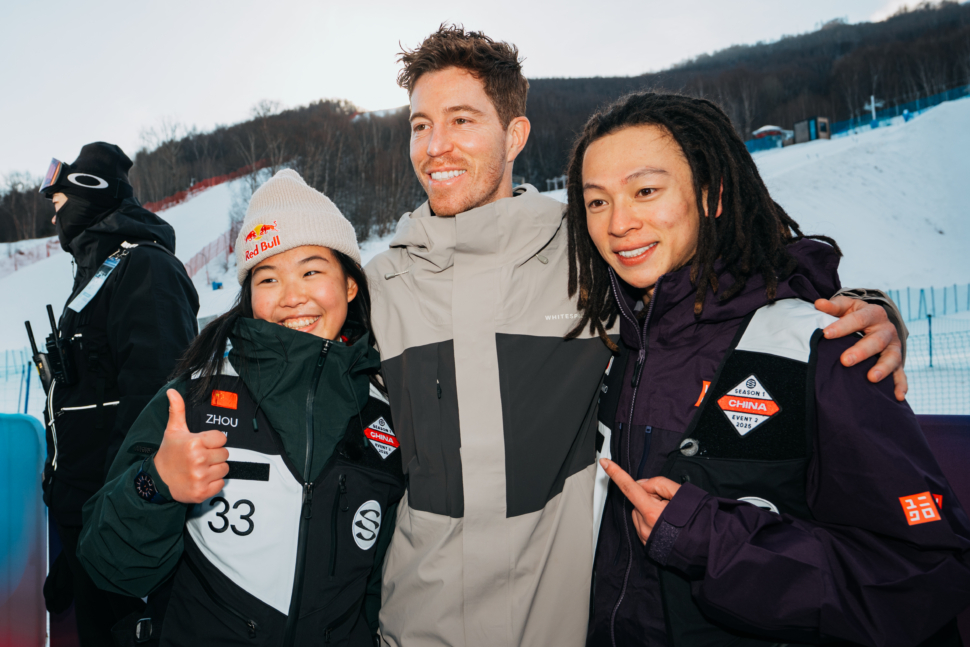
Do you think The Snow League will have an impact on Olympic 2026 spectatorship?
I hope so. That’s one of the reasons why it was so important to do this series and partner with NBC. Having the world spotlight spin and land on winter sports with us being a part of it or even mentioned at The Olympics is so big for us. It’s nice to build up into The Olympics and that’s why NBC wanted it. It’s nice to have something leading into it.
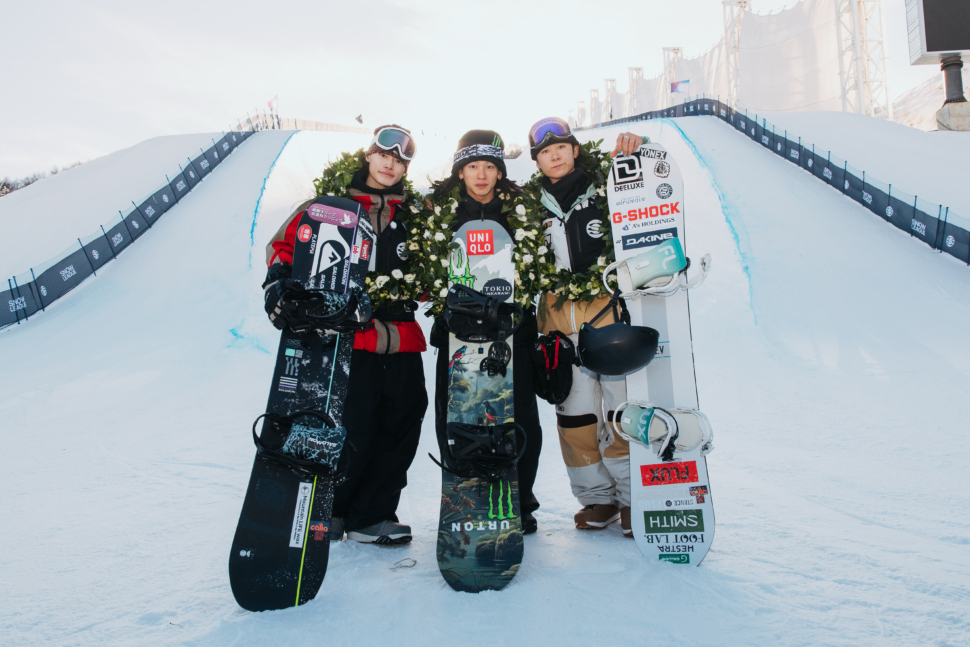
So, if this builds the momentum, have you felt that this format would have an influence on how other contests are run?
I do wonder that. It’s more exciting, there’s rivalry, more airtime. You get more of the athletes, the matchups, and who’s going to get matched up with who. We kept the judging the same because we didn’t want people to change their style of riding for our event then go back to something different for The Olympics. It would be cool if it ended up making that kind of impact and changing. We’ll see.
There’s this element of spectatorship and involvement here, so how are you making these events accessible to non-endemic spectators?
That’s exactly the kind of bullet points we touched on with changing the format. It’s more palatable for people at home. Having better commentary of our sport. There’s a lot of “that’s sick bro” thrown around and it’s fine, I say it too, but there’s a time and a place. We need to rely more on sports science, like how fast they are travelling or how high and how many degrees of rotation. The World Surfing League took that lingo and talk and made it more proper and elevated. We’re pulling things from different places, but that brings people in that don’t know the sport. And then obviously telling the stories.
And has this always been a long term vision of yours?
There’s always been opinions about you know, watching the US Open go from three or four events down to one. Events were shrinking and changing and disappearing. The Dew Tour was just a marketing engine for Mountain Dew. Then there was TTR and that’s gone. I just remember seeing these things happening and it was always frustrating for me because I was competing and winning and I still wouldn’t be the world champion at the end. I was like okay what are we going to do?
One of your slogans is “The Future of Winter Sports Competition”. What does that mean to you?
We’re just trying to change it. We’re trying to change how this has been for so long and I know we have only done two events but I feel the shift. I’m feeling excitement from the athletes and feeling the shift from the media. We’re at the edge of our seats. I just feel like it is the future and I’m very much a person to project it, we’re calling it out and we are going to run toward it.
How does it feel to bring this event here after retiring at this venue?
It’s bittersweet in a way. I think about riding still all the time, they’re making the triples look really easy. Maybe I built it up too much. It’s cool, but closing the chapter here and opening this new one is really special to be able to come back in a brand new way and the way I feel about it inside has been so different. I was so stressed. I was like okay I have to end my career in the right way, I hope I don’t fall, I hope I don’t get carted out or something. To be back here in this way supporting other athletes has me very proud of putting this all together. It’s fun that the career gets to go on. You do think, wow what’s next? Is it over? Will I still be involved?
What would you say the ultimate objective of the Snow League is?
I mean, I hate to coin our phrase, but the future. We just want to be the home for winter sports. I want it to be like when you toggle through and you get NBA or NHL, and then The Snow League pops up. I want it to be the home for it all. Not to say there can’t be other events, but we should have a home for all of this. A place where people can go and check in on how their athletes are ranking through the tour and the stories and all the stuff we talked about.