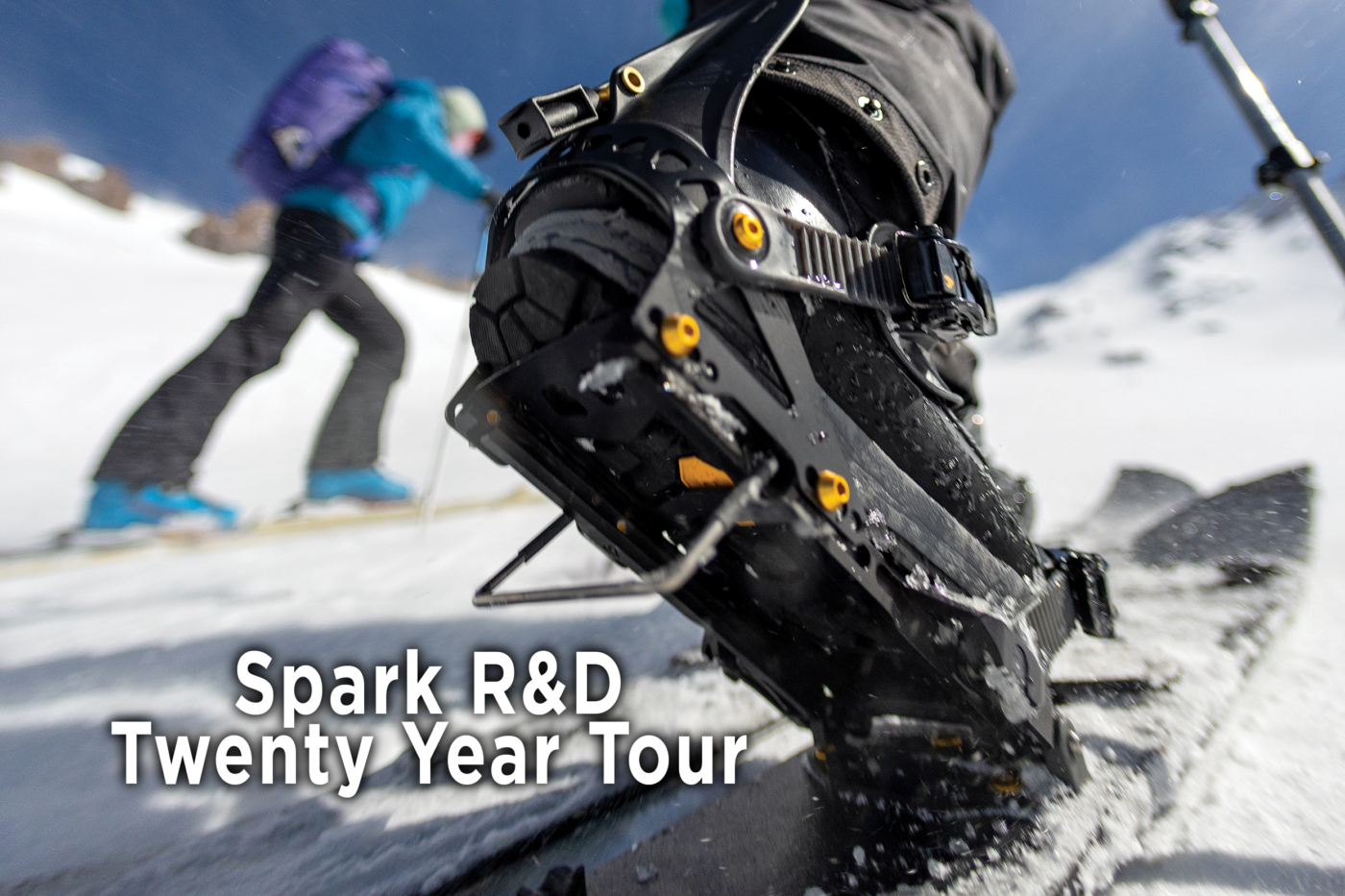
Twenty years ago, Will Ritter was seeking a solution. With a degree in mechanical engineering backing his process, Ritter began prototyping a splitboard binding that could do more while remaining relatively simple. Focused on efficiency and function, Spark R&D was born in Bozeman, Montana where it continues to operate today.


It hasn’t been long since early adopters of human-powered snowboarding were self-splitting boards, rigging adapter plates to standard bindings, and customizing tail clips on their skins. The act of splitboarding wasn’t always a smooth process, and clunky tech built a reputation of a sluggish, heavy, difficult way of getting up a mountain reserved only for those willing to suffer in order to breach resort boundaries.
While some riders in Europe had started working on hardboot specific splitboards as early as the late 80’s, avalanche forecaster Brett “Kowboy” Kobernik along with founder and CEO of Voile, Wally Wariakois brought the first soft boot compatible system to market in the early 90’s. This early iteration of what splitboarding could become wasn’t cutting it for Spark R&D’s founder, Will Ritter, who began prototyping in 2003, bringing the first true splitboard binding–the Ignition–to market in 2006. Name aside, it’s been twenty years since that binding ignited something in the sport of splitboarding. As the binding itself has evolved significantly, the core philosophy remains the same: simple, efficient product with the least amount of moving parts.
We’ve seen the Spark bindings move through big developments like the introduction of the Tesla system in 2013, removing pins from the equation, and later the T1 in 2015, which simplified climbing wires and highbacks for improved ascension. Reflecting on his refinement process, Ritter says, “when I was working as a product designer before I started this, there was a quote that went something like: the product’s done when you can’t remove any more parts from it. In the backcountry, every single part is something that can break, or get lost, or fall off, and wreck your day.”
“People often have such an appetite for what’s new; whatever’s different must be better”. Rejecting what’s new and refining what works has been the north star for Spark since day one, and the philosophy is distilled into every aspect of the company from the staff, to the team, and even the warehouse.
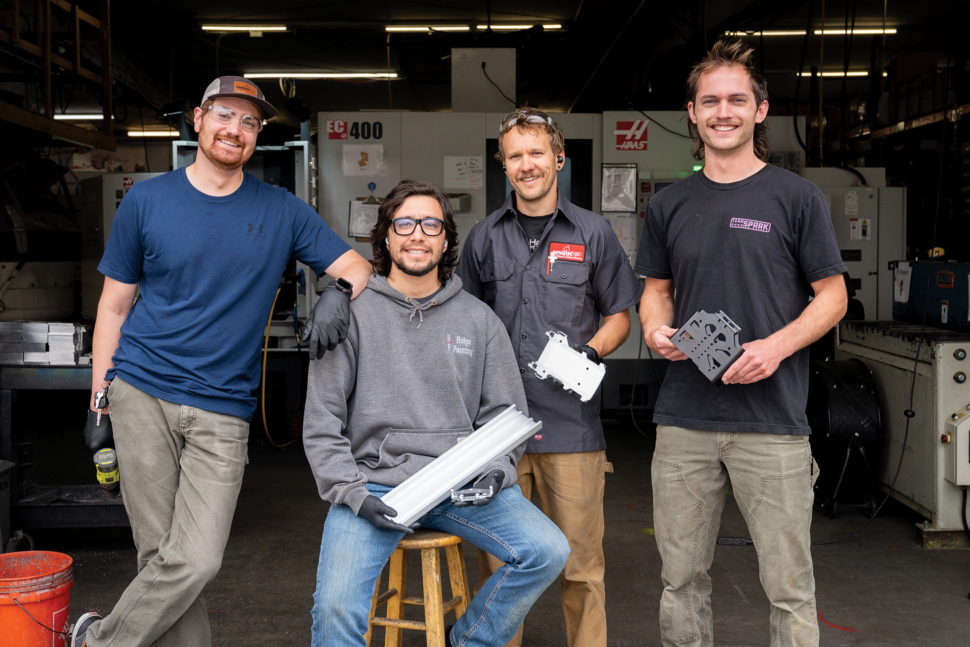
With only 38 employees and a manufacturing site in Bozeman, Montana, the brand operates in a way that is rarely found in North America. There’s ample access to product testing, minimal impact from supply chain hold ups or overseas manufacturing. Leaving the “we’re a family” corporate pizza party prophecy behind, Ritter has been operating like a real family, because that’s what Spark was built on. A team looking to better their outdoor experience, have fun, and actually go snowboarding while supporting those who are doing the same.
The impact of this year’s wave of tariffs shines a light on how small, domestic brands like Spark can stay afloat in the wake of supply chain typhoons. “We are less affected, certainly,” Ritter says. Because Spark makes nearly everything domestically and sources most of its raw material from the US, they were able to sidestep the worst of it. What started as a personal project for a young engineer looking to move faster through the mountains has become a genuine advantage twenty years later. Billy Madej, Marketing Manager at Spark, puts the company’s focus plainly: “We don’t make a solid-board binding, we focus primarily and only on splitboarding. And I think there’s something to be said for being part of the industry for 20 years and holding on. We’ve been doing just splitboarding for 20 years.”


Anyone who’s put Spark bindings through the paces knows they are built from a place where simplicity and efficiency coalesce. It’s rigorous testing, refinement, and simply using the bindings day-in-day-out in all conditions that keeps the brand core to its ethos. Not only does the team at Spark HQ drive input and feedback, but their vast ambassador and guide team makes up a large portion of their research and development. Spark has built a network of splitboarders that are truly invested in supporting product development, providing feedback, and testing their bindings everywhere from backyard laps to far away corners of the world. It’s an open feedback loop between brand and team, not just product support.
Guides, Madej points out, are trusting the gear with their own lives and their clients’ lives, every single day. “That’s kind of where the research and development is baked in,” he says. Ritter runs an annual survey across the full ambassador roster for the same reason: riders spread across wildly different snowpacks and climates catch problems Bozeman would never see locally. It’s part of why the company shifted more attention toward Europe and Japan years back, after early feedback that they were leaning on North American riders. “People need it to feel close to them,” Ritter says, “not just some anonymous company on the other side of the planet.”
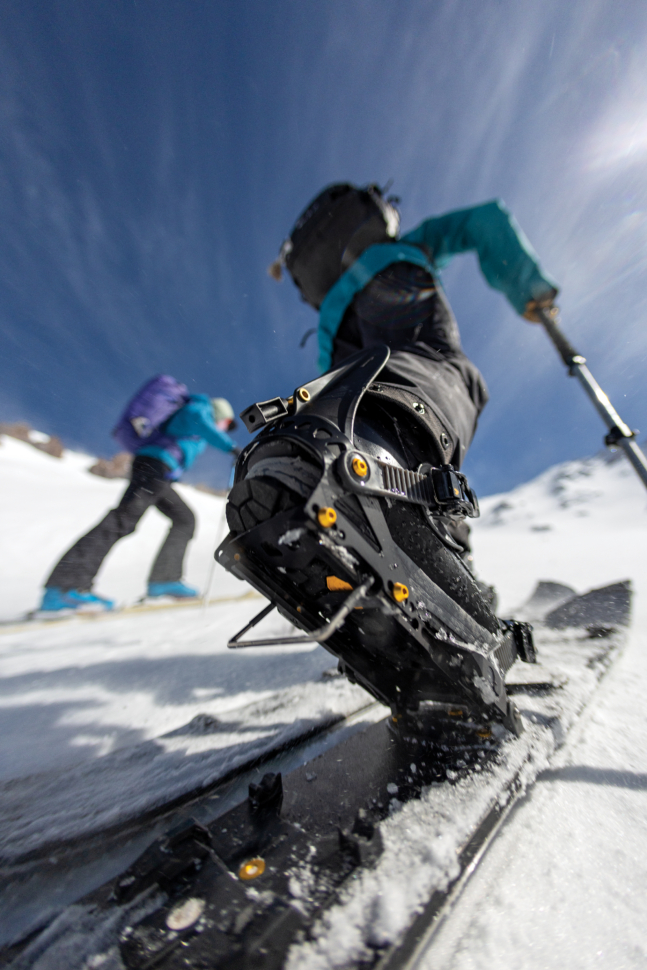
Twenty years in, Spark has changed drastically, while not changing anything at all. The simplicity philosophy is the driving force of development, which is felt by its users. Ritter recalls being approached at a trade show recently and being told “You’ve done a fantastic job of not fucking up everything that works”. And that may be the most succinct way to sum up the impact Spark has made on the sport over the past twenty years. In an industry hungry for innovation, Spark has remained steadfast in knowing what not to touch and quietly perfecting everything else around it.