At this point, every halfpipe contest pushes the limits of what we think is possible on a board so we don’t think it is a stretch to say Mother Nature robbed us all of something amazing this weekend… but that doesn’t mean what we saw leading up to the finals wasn’t already great. Full recap from Ally Watson below. – Ed. Note
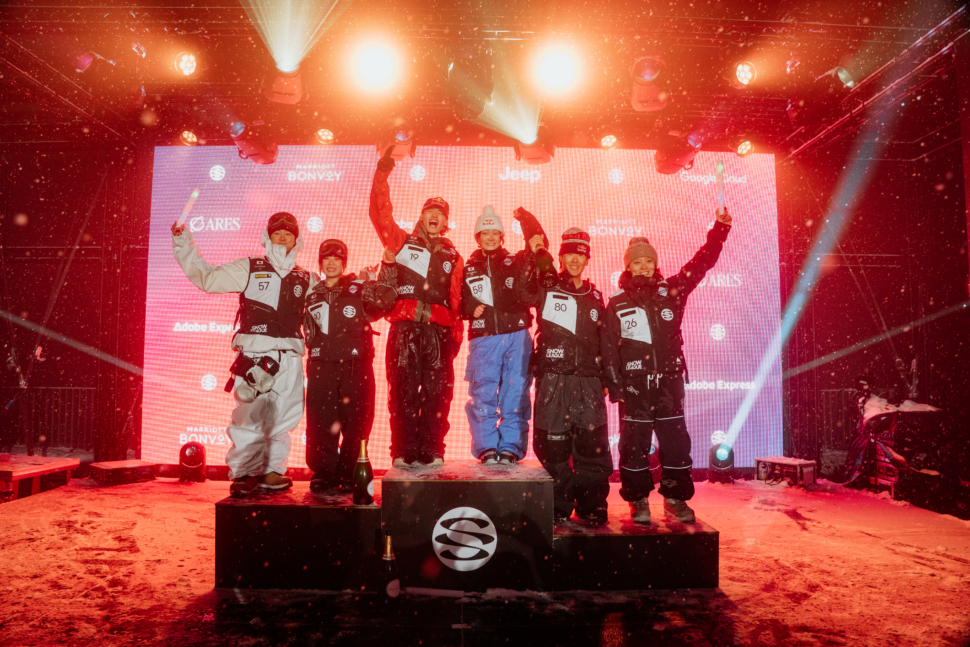
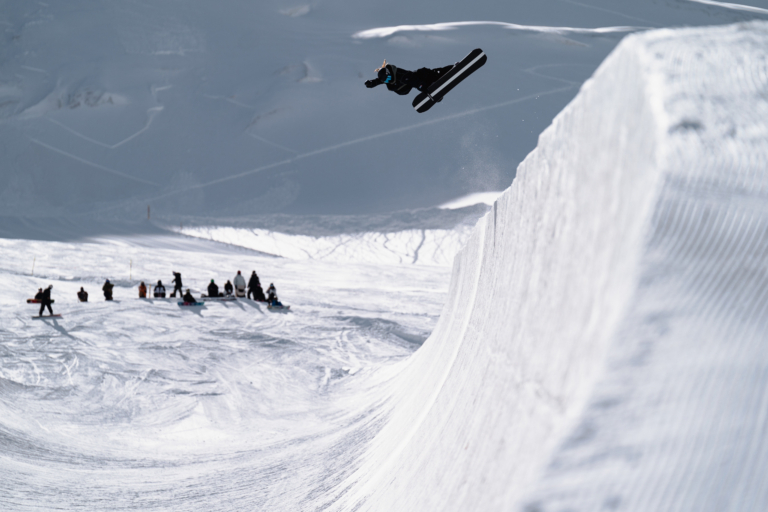
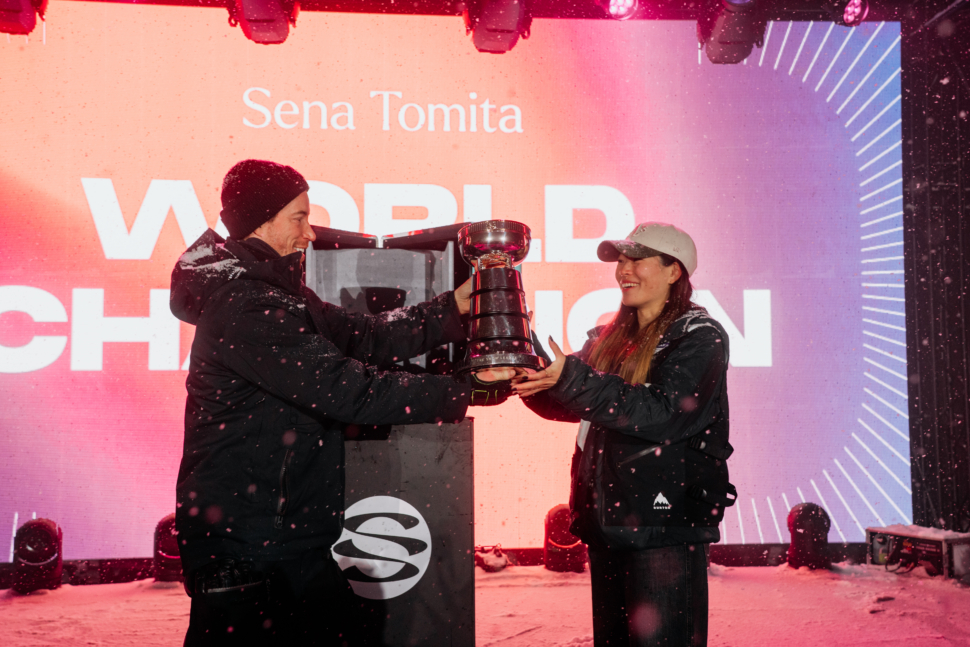
Under the auroral lights of the LAAX mainstage atop what most will say is the best halfpipe in the world, The Snow League officially crowned its first league champions, Sena Tomita and Yuto Totsuka. After four tour stops in its debut season, Shaun White’s answer to a stagnant competition structure has not only named champions, but it has rewritten the playbook, building an ecosystem that provokes strategy and demands endurance.
“Most riders are realizing our format is not a sprint to the finish, it’s a marathon”, says Sandy Macdonald, Snow League’s Chief of Competition. “I’ve seen riders riding less practice and doing more calculated runs.” Snow League LAAX proved the value of a calculated run as the night final was cut short due to inclement weather. Final results were taken from men’s quarterfinals and women’s semifinals amidst the spring blizzard that refused to blow past the venue, clouding the visibility to a point of no return. With the women in the middle of their finals matchups and the men strapping in for their last pull, the podium was called.
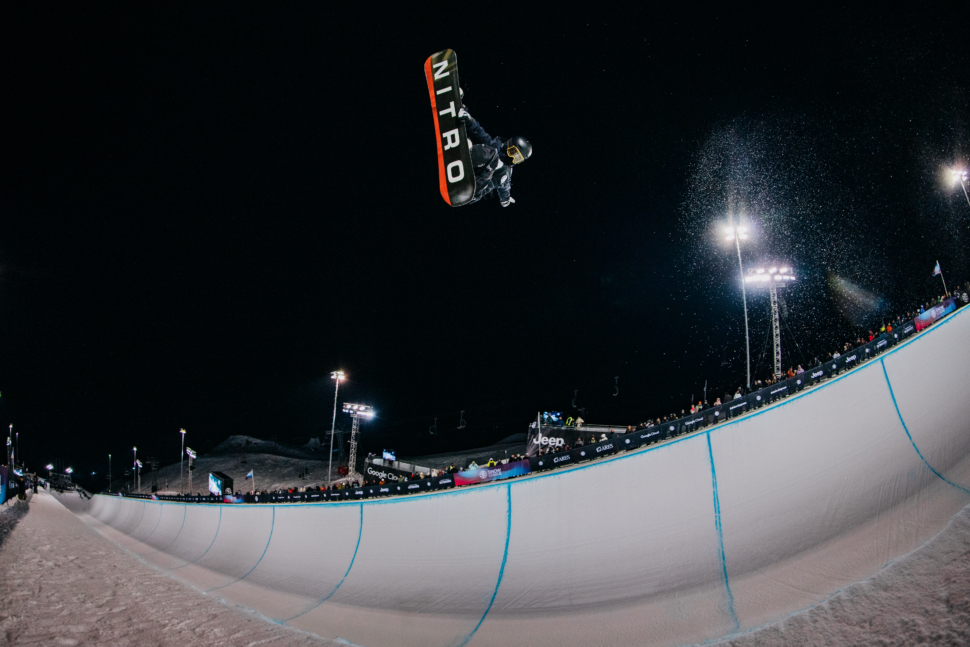
Men’s Podium
- Ryusei Yamada
- Yuto Totsuka
- Chaeun Lee
Women’s Podium
- Sara Shimizu
- Rise Kudo
- Xuetong Cai
Jeep Biggest Air:
Men’s – Ryusei Yamada 21’4”
Women’s – Patti Zhou 13’
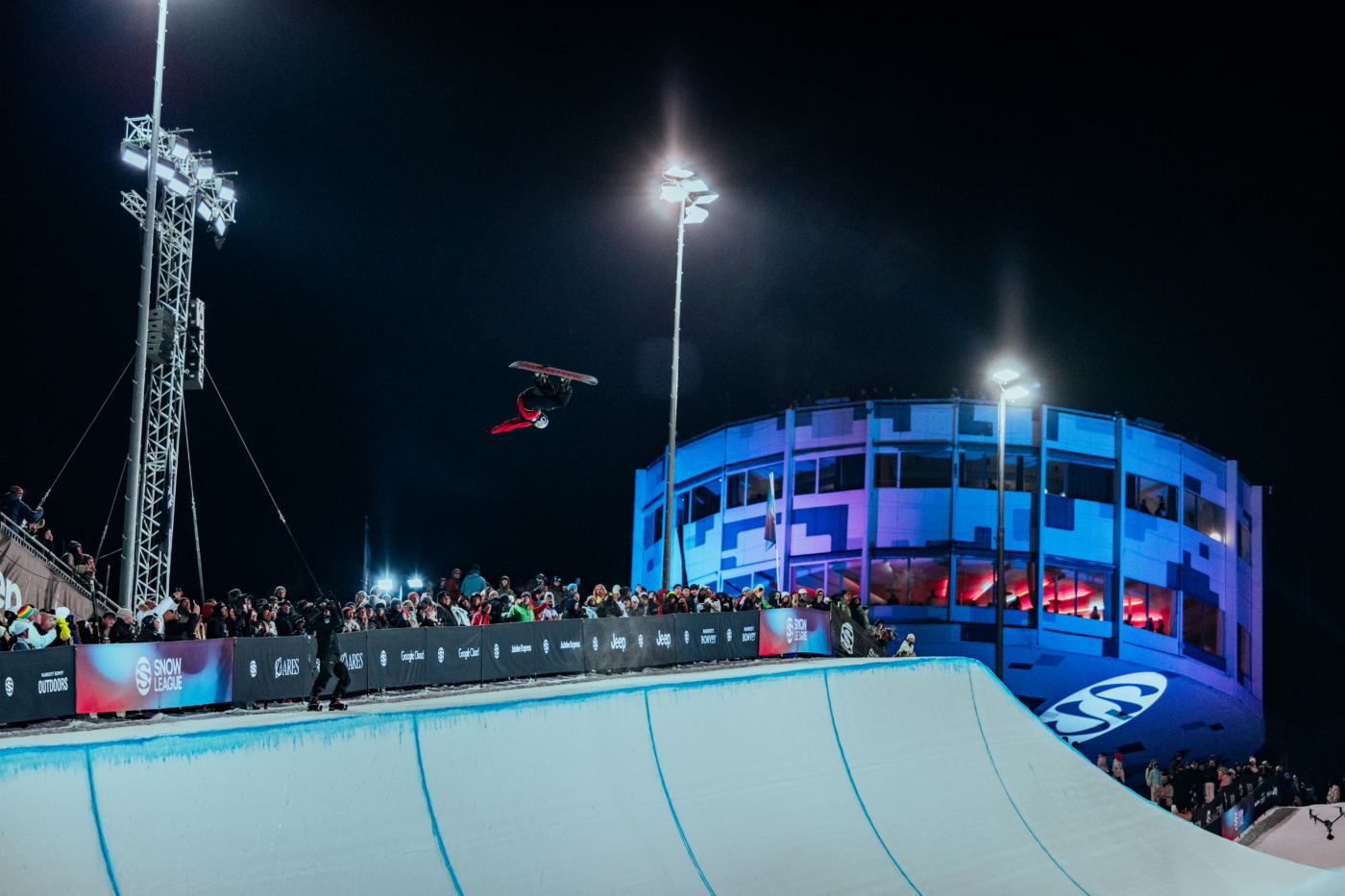
LAAX may have culminated the season with a championship, but there was still a battle for the podium at stop four. Quarterfinals went down under blue skies, and with heavy brackets, riders were putting down some of the best runs we’ve seen all year. Maddie Mastro’s quarterfinal heat against Sara Shimizu was a clear example of the stakes at risk leading to the final. Maddie put down the best run we’ve ever seen in women’s halfpipe history, opening with her signature double crippler and adding in a front double cork 10 near the bottom. With stakes high, Sara Shimizu answered with another best run ever, opening up with a front double 10 truck driver twelve feet out of the pipe and adding back-to-back 9’s later in her run scoring a 95.75 to Maddie’s 94.
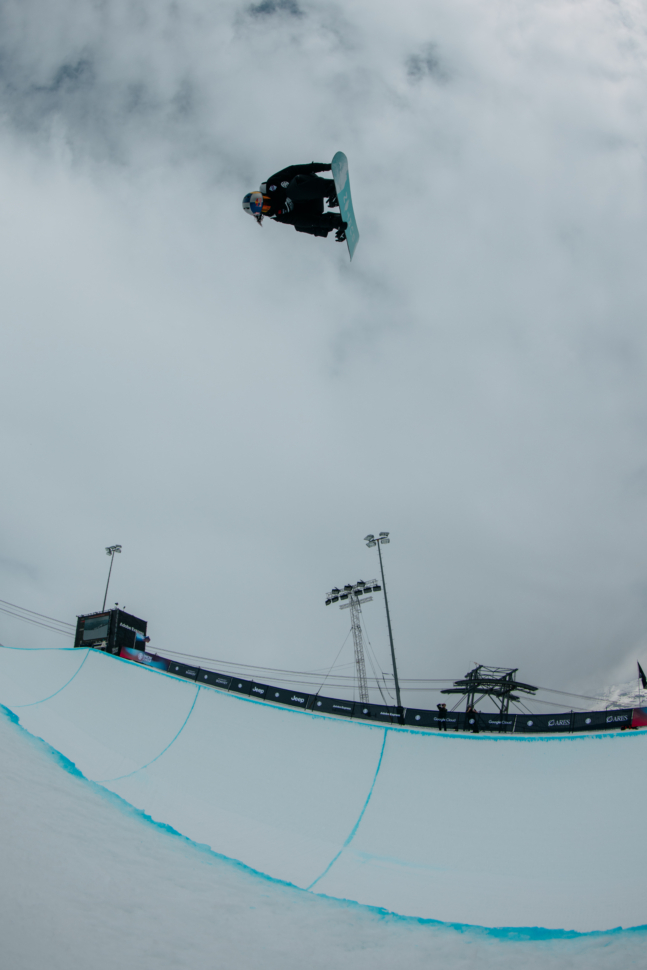
Battles like these are a testament to the nature of the format where in a traditional contest, a single standout run like both Maddie and Sara put down would hold their standings throughout the day. In a bracket format, athletes must play to their opponent answering in real time putting risk on the line. While I would have loved to see Maddie move forward, she showed us what’s in the bag for next season and how her strategic approach to risk and reward will be one to watch.
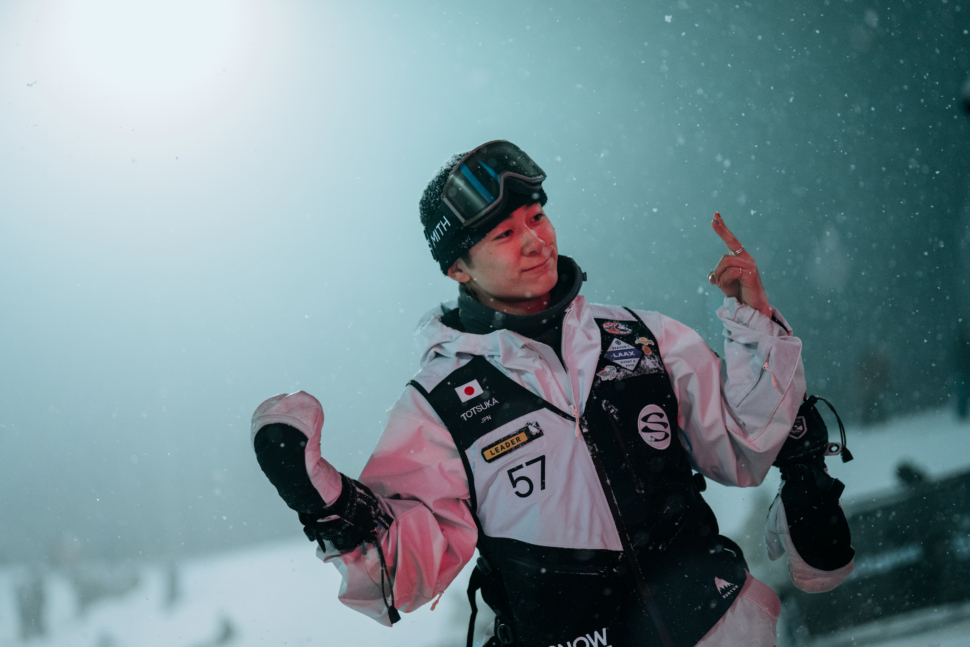
On the men’s side finalists were stripped of the chance to battle it out under the lights, but the quarterfinals still delivered. Yamada’s 92.75 put him atop the podium further solidifying the caliber of riding we saw in qualifying and early finals runs. Chaeun Lee advanced ahead of Cam Melville Ives who in the third run tiebreaker took a heavy slam on his backside alleyoop double rodeo 9, pulling him out of the contest.
With a full season of The Snow League under wraps, it’s clear that the format has reshaped how riders approach competition. We’ve seen more variation in the runs, a new kind of progression, and a challenge that riders are stepping to by building new runs and reacting to their opponents with each run. Macdonald also notes, “our formats are making coaching way more difficult, the first Aspen event, people’s heads were exploding”. Coaches are now looking at strategy, endurance, and variety in ways that haven’t been asked in a traditional format.
If a bracket goes 1:1, riders are sent into a tiebreaker third run in order to move forward. If every matchup goes to a tiebreaker, a rider may need to take nine runs in a day, ordering a level of endurance that is being felt across the league. Yuto Totsuka and Ryusei Yamada’s now recurring one-hit pact may or may not be responding to endurance, but it shines a light on the athlete-driven nature of The Snow League. The Japanese compatriots have now twice mirrored each other’s switch backside alleyoop double rodeo 900, showing us that this is ultimately a rider’s contest.
Sena Tomita and Yuto Totsuka have left LAAX with the first Snow League titles (and a decent chunk of the prize purse), but neither path was as straightforward as a traditional season might suggest. Tomita was knocked out by Mitsuki Ono in the quarterfinals, yet officially became the season champ when Ono was pushed out by Shimizu in the semis. Totsuka didn’t need a win at the final stop to secure the overall crown, but consistency throughout the season placed him on top.
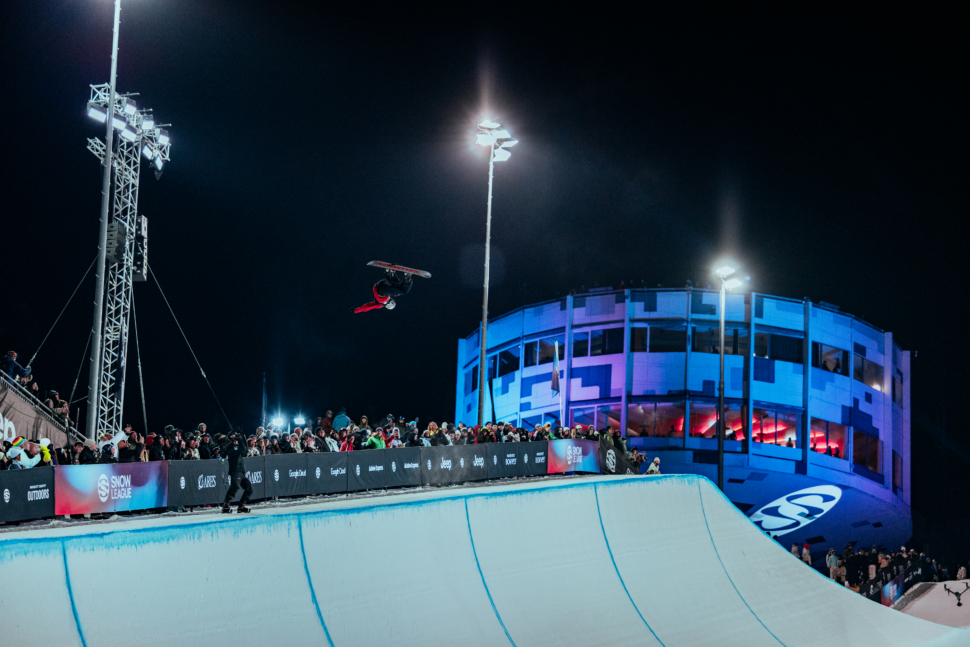
Throughout season one we saw repeat matchups, new stars take the podium, all while strategy came into play more and more at every stop, giving each rider in the field an edge coming into season two. Sara Shimizu entered the tour in Aspen and won both of her events, immediately shifting the pace of the women’s side. Over a full season, it’s hard not to wonder how that will play out against Tomita in season two. On the men’s side, Jake Pates showed what he’s capable of with a podium in Aspen before falling short in LAAX, the kind of swing that leaves something to be fought for in season two. Crowd favorite Ayumu Hirano did not compete in LAAX, but has secured his invite for season two.
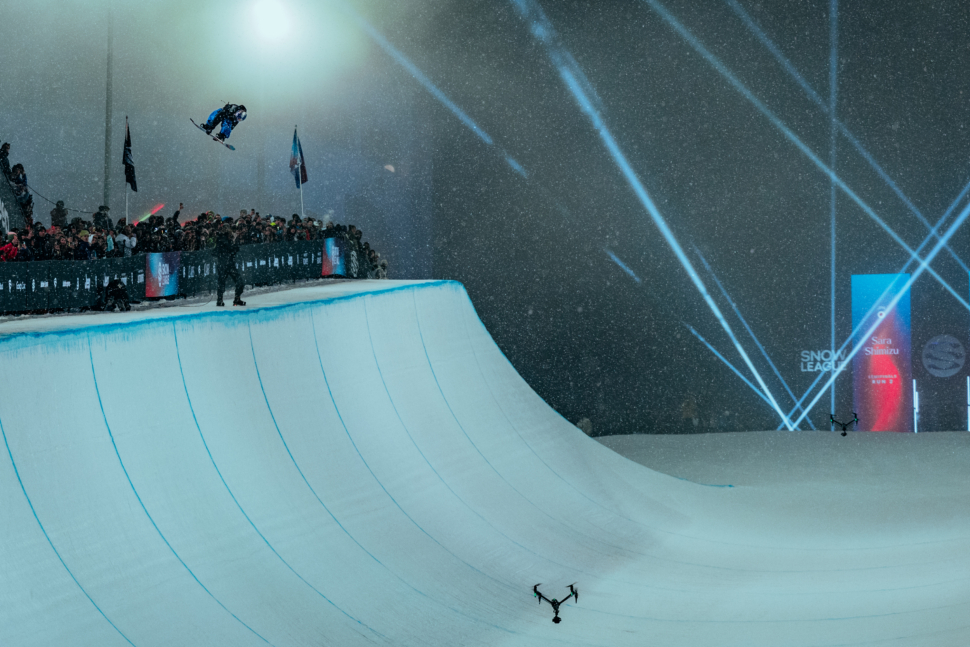
With a top eight cut line now in place, the league is starting to feel more defined. Results carry forward offering a guaranteed invite to the top eight, leaving the rest of the field to prove themselves as considerations for season two. It adds a layer of consequence that goes beyond a single event and starts to build something closer to a true tour.
A full season in, riders now head into the offseason with a tangible understanding of what this format asks of them, shaping how they aim to progress and add to their runs. The Snow League Season Two is due to raise the bar and with summer training on the horizon, we’ll be ready to place some bets on future brackets.
Live event coverage (and On Demand replays) available now on Peacock with a linear TV broadcast that follows on NBC. The Finals Show will feature the snowboard competition on Sunday, March 29 at 2:00 pm ET.